
Dialing in Arkansas: The Phone Codes You Use
The basic dialing rule is now the same statewide: local calls take all ten digits. The 501 and 479 regions made that switch in 2021 ahead of the 988 rollout, and the 870 region followed in January 2024 when the 327 overlay arrived. Seven-digit calls no longer complete anywhere in the state. Each type of call stacks its phone codes a little differently:
| Call Type | Phone Code Format | Example |
|---|---|---|
| Local within Arkansas | 10 digits (area code + number) | 501-682-3000 |
| Long distance in the US | 1 + 10 digits on many landlines | 1-479-575-2000 |
| Toll-free | 1 + toll-free prefix + 7 digits | 1-800-482-8982 |
| International from Arkansas | 011 + country code + number, or + on mobile | 011, then the destination digits |
| Service short codes | 3 digits | 211, 811, 911, 988 |
Landlines and mobiles differ a little on the second row. Many Arkansas landline plans still want the 1 before a long-distance number, while mobile phones usually complete the call either way. Storing contacts with the area code included, or with +1 in front, keeps every one of these formats working without edits.
N11 Phone Codes That Work in Arkansas
The three-digit service codes, called N11 codes, behave differently here than a national chart suggests. Some reach statewide Arkansas services. One, 311, mostly does not work at all, because Arkansas has no statewide 311 and only certain cities run their own. Here is what each phone code actually reaches in this state:
| N11 Phone Code | What It Reaches in Arkansas |
|---|---|
| 211 | Arkansas 211, the statewide community-services line |
| 311 | Not statewide; a few individual cities only |
| 411 | Carrier directory assistance, often with a fee |
| 511 | Travel and road conditions where offered; check ARDOT services |
| 611 | Your own phone carrier's customer service |
| 711 | Telecommunications Relay Service for TTY and voice relay |
| 811 | Arkansas 811, call before you dig |
| 911 | Emergency dispatch, police, fire, medical |
| 988 | Suicide and Crisis Lifeline, nationwide since July 16, 2022 |
The 988 code deserves its own footnote in Arkansas history. Because some local prefixes started with 988, the old seven-digit dialing had to end in 501 and 479 before the crisis line could launch. A three-digit phone code quietly rewired how half the state dials.
Star Codes on Arkansas Phone Lines
Star codes, formally vertical service codes, are the phone codes that manage your own line rather than reaching someone else's. Support varies by carrier, and some features carry fees or exist only on landlines, so check your plan before relying on one. The common set:
| Star Phone Code | Action |
|---|---|
| *57 | Call trace after a threatening call, availability varies by carrier |
| *60 | Selective call block for chosen numbers |
| *67 | Hide your caller ID for the next call |
| *69 | Return the last incoming call |
| *70 | Pause call waiting for one call |
| *72 / *73 | Turn call forwarding on / off |
| *77 | Reject anonymous calls |
| *82 | Show your caller ID when it is normally blocked |
Note: Star code behavior is set by your carrier, not by the state, so two neighbors on different providers can get different results from the same code.
Arkansas 211 and 811 Up Close
Two of the N11 phone codes are worth a closer look because Arkansas built real operations behind them. Arkansas 211 is more than a phone line. As its how-it-works page explains, resource specialists search a statewide database, send referrals by phone, email, or text, and warm-transfer callers in crisis to trained help.
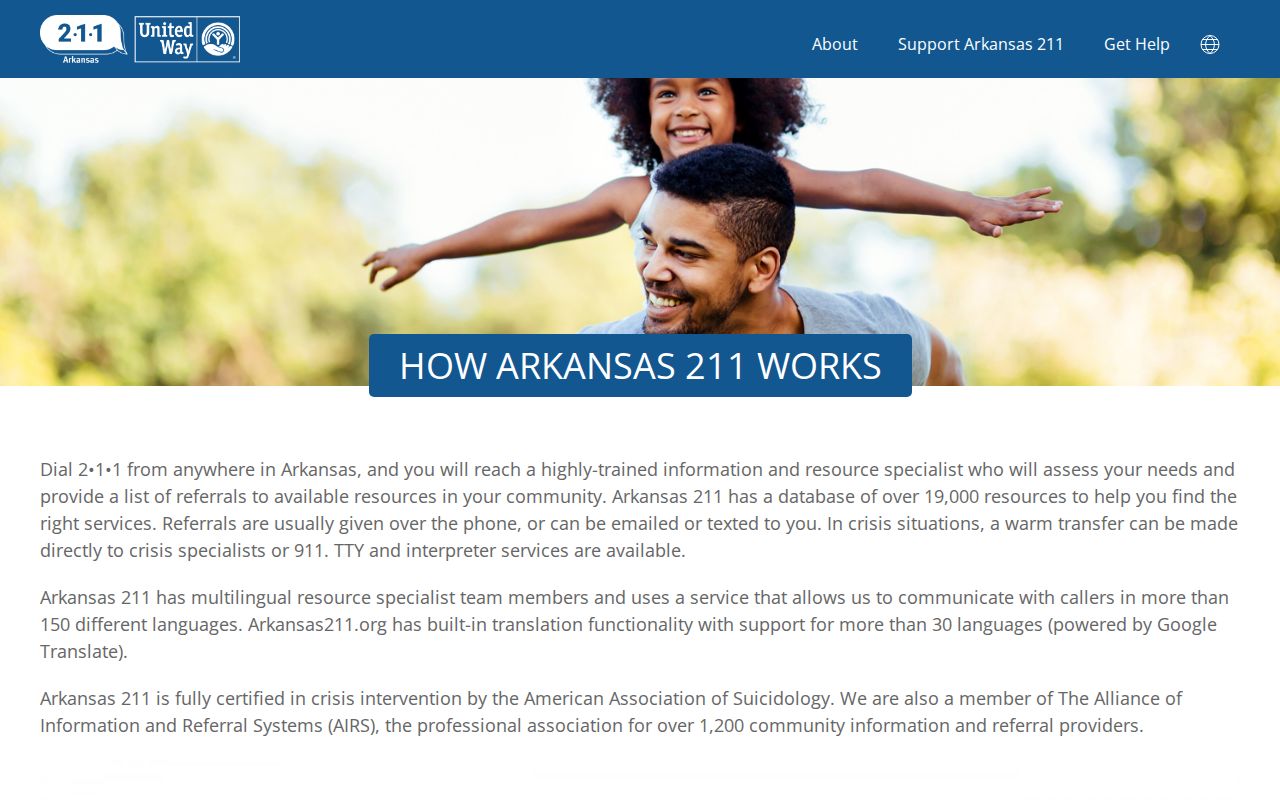
Dialing the three digits is only one door in. The Arkansas 211 support page lists the alternates: 866-489-6983 by voice, a ZIP code texted to 898211, and an email contact.
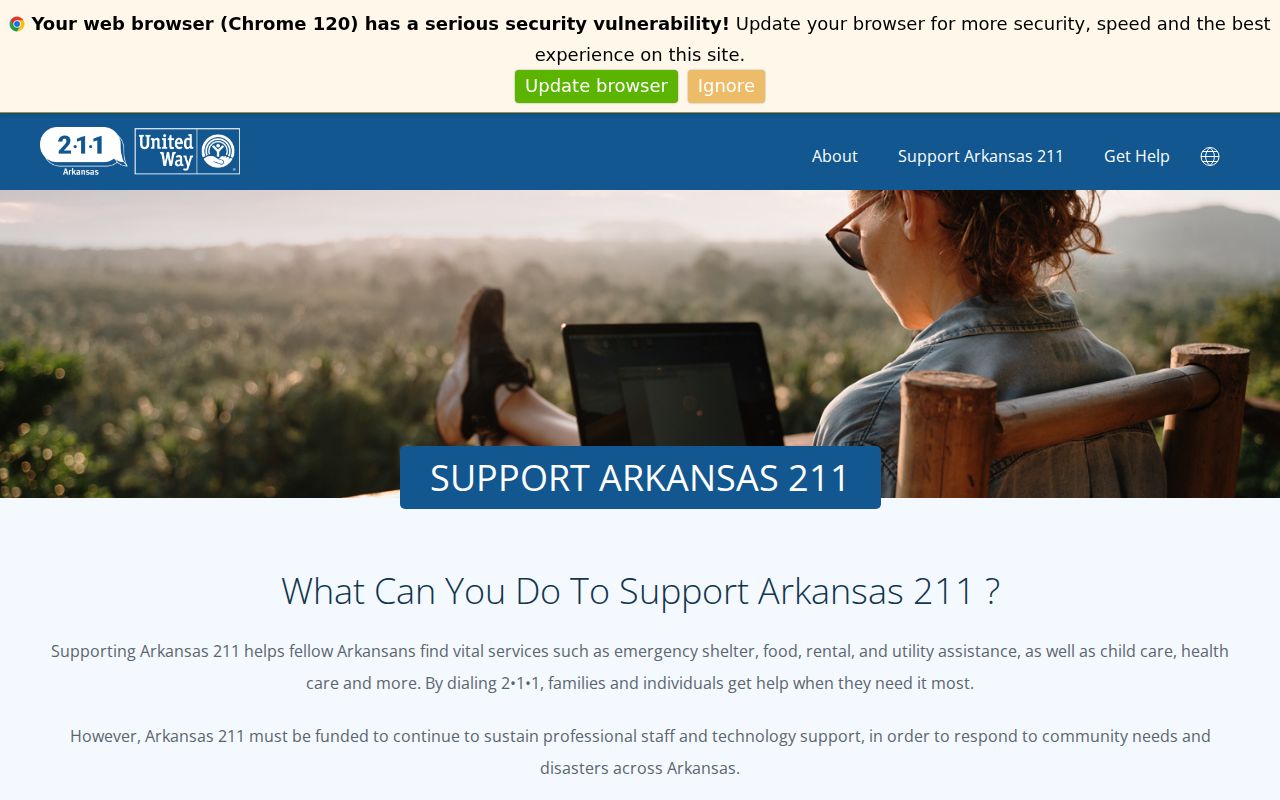
Those alternates matter when a phone code fails, like dialing 211 from some workplace phone systems. The dig-safety code runs the same dual setup. Arkansas 811 takes locate requests by phone, but its website files tickets online and tracks them afterward.
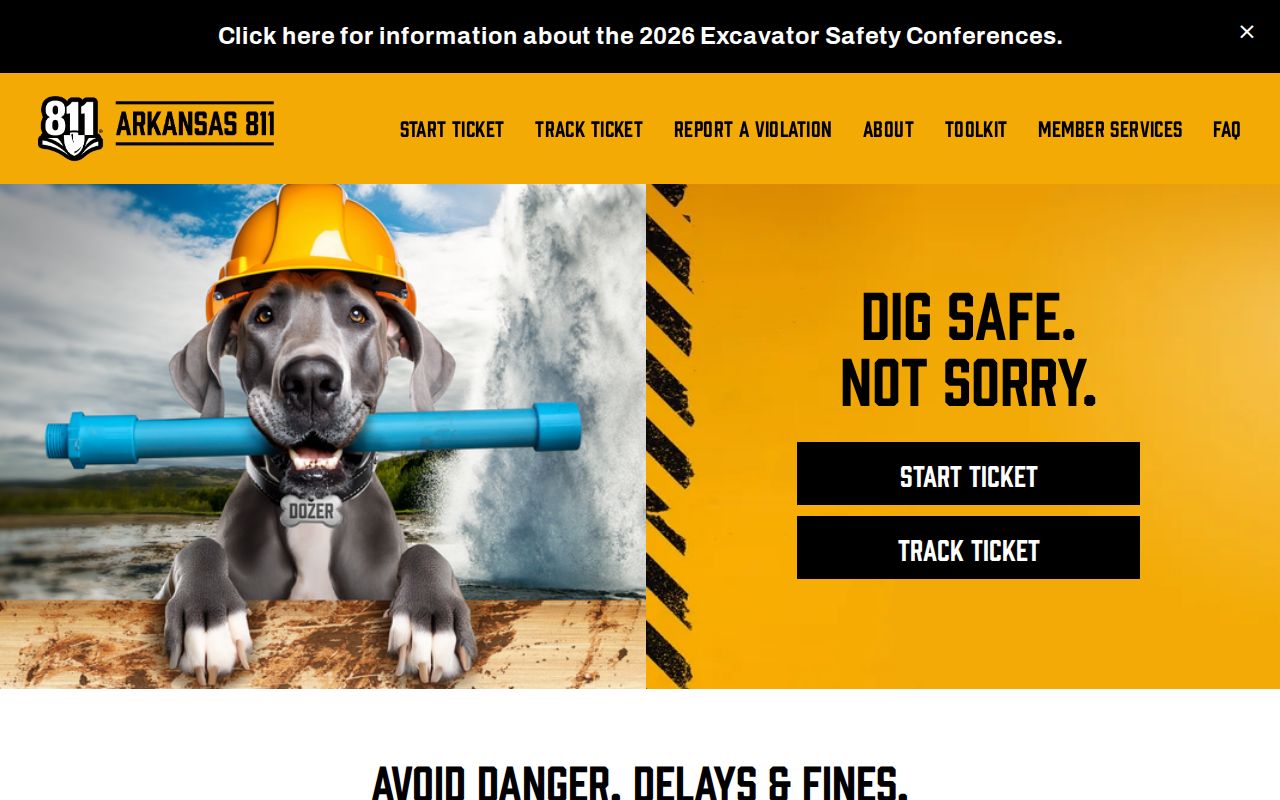
The track-ticket feature shown above is the part most people miss: 811 is a workflow, not just a number, and the ticket status is checkable without calling anyone.
Area Codes as Arkansas Phone Codes
The first three digits of any full number are a phone code too, the NPA in industry terms. Arkansas runs four of them, and each one signals a region of the state:
- 501 - central Arkansas, the original 1947 code
- 479 - northwest and west Arkansas, split off in 2002
- 870 - north, east, and south Arkansas, split off in 1997
- 327 - overlay sharing the 870 territory since February 2024
The geography, the split history, and the overlay mechanics get full treatment on the Arkansas phone area codes page. Here the point is simpler: these four codes are the only local-looking prefixes a genuine Arkansas number can carry.
Toll-Free and Premium Phone Codes
Toll-free prefixes are the phone codes that flip the billing: the called party pays instead of the caller. Seven are active: 800, 888, 877, 866, 855, 844, and 833, each added as the one before it filled up. Arkansas state government leans on them heavily, from the AG's consumer line at 800-482-8982 to the PSC's toll-free complaint line at 800-482-1164, so residents can reach Little Rock without paying long distance. Toll-free numbers are managed through responsible organizations, called RespOrgs, and can be ported between them just like regular numbers.
Two other prefixes deserve caution rather than use. The 900 phone code marks premium-rate services that charge by the call, and unknown 900 numbers are best left unanswered. The old 976 exchange served a similar pay-per-call role and survives only as a rarity. Neither should ever appear on a bill you did not expect.
Dialing Out: +1 and International Codes
Arkansas sits inside the North American Numbering Plan, so its country code is +1, shared with the rest of the US and Canada. Domestic callers almost never dial it, but it becomes essential the moment a call crosses a border in either direction. Three patterns cover it:
- Calling abroad from an Arkansas landline: dial 011, then the destination country code, then the local number.
- Calling abroad from a mobile: long-press 0 to get +, then the country code and number. The + replaces 011.
- Calling Arkansas from another country: dial that country's exit code, then 1, then the ten-digit Arkansas number.
Saving numbers in the +1 format, like +1 501-682-3000, is the one habit that makes a contact dialable from anywhere in the world.
Exchange Codes Inside Arkansas Numbers
Between the area code and the last four digits sits another phone code: the three-digit exchange, or NXX. Exchanges map to rate centers, and in Arkansas a few still carry a recognizable identity. The 682 exchange under 501 is practically a state-government signature, appearing in the State Operator, PSC, DFA, and education numbers. The 575 exchange shows up under both 479 for the Fayetteville campus and 870 for Pine Bluff's.
Do not lean on that pattern too hard. Modern numbering hands out blocks of a thousand numbers at a time, so several carriers can share a single Arkansas exchange. Number portability lets a number keep its exchange code while changing carriers, and spoofing lets a scammer display any exchange at all. An official-looking prefix is a reason to check the number against a directory, not a reason to trust it.
When a Phone Code Looks Local but Is Not
Scam callers deliberately display Arkansas phone codes because a 501 or 870 number feels answerable. The defense built into the network is STIR/SHAKEN, the FCC's caller ID authentication framework, which lets carriers verify whether a call's displayed number was signed by the originating network. That verification powers the "Likely Spam" and "Spam Risk" labels on your screen. The labels help, but they are probabilistic: a real number occasionally gets flagged, and a spoofed one occasionally slips through clean.
When a suspicious call does land, the federal government keeps a plain-language map of where to send it. The USA.gov scam-call guide sorts complaints between the FTC and FCC channels.
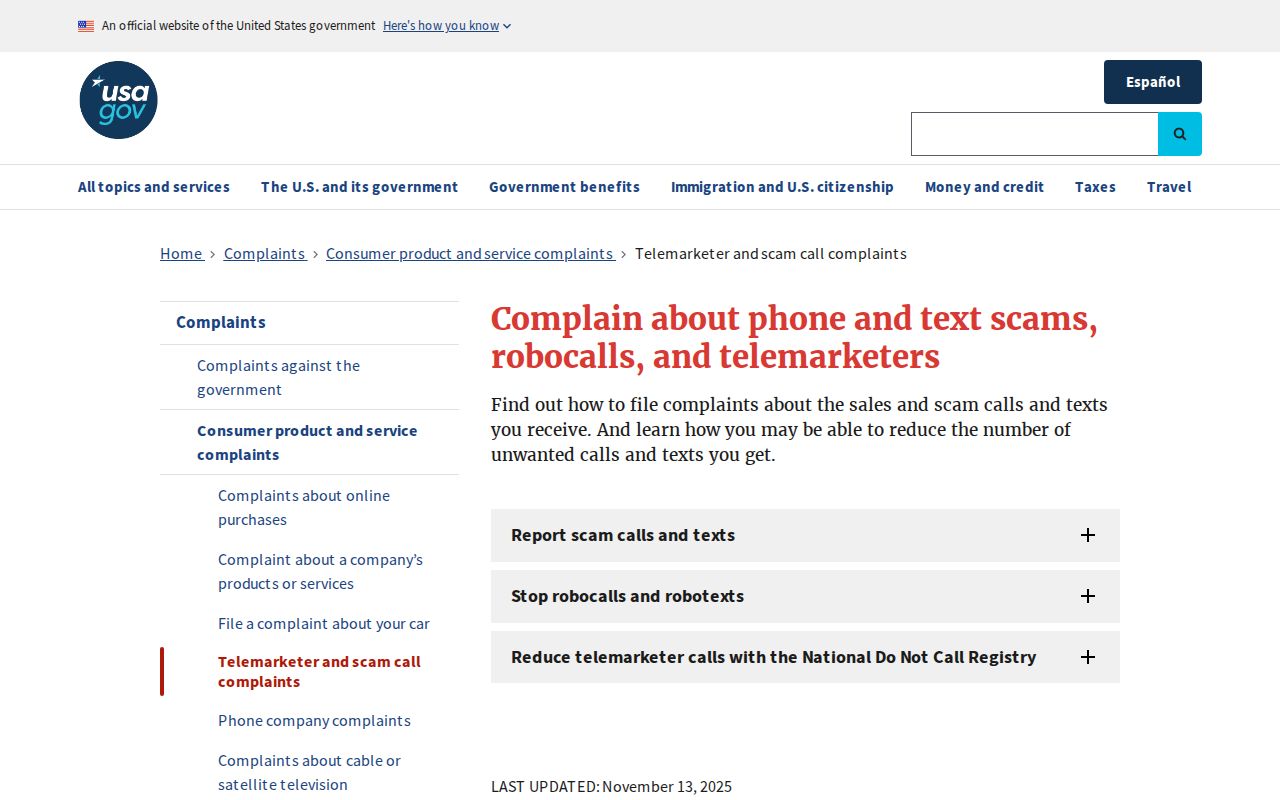
It is the quickest answer to the perennial question of which agency wants which complaint, and it pairs with the Arkansas AG's own robocall form for state-level reports.
Phone Code Definitions
The jargon around phone codes is thicker than the codes themselves, so here is the short glossary:
- NPA
- Numbering Plan Area, the 3-digit area code that starts every North American number.
- NXX
- The central office or exchange code, the 3 digits after the area code.
- N11
- The 3-digit service codes: 211, 311, 411, 511, 611, 711, 811, 911, plus 988.
- Vertical Service Code
- A star followed by two digits that triggers a call-handling feature on your line.
- Toll-Free Prefix
- A code that bills the called party: 800, 888, 877, 866, 855, 844, or 833.
- NANP
- The North American Numbering Plan, the +1 region covering the US, Canada, and Caribbean partners.
How to Verify an Arkansas Phone Code
Verification splits by code family. Area codes and exchanges are confirmed through NANPA's official assignment records, which show every code and prefix assigned in Arkansas. Dialing rules, N11 behavior, and caller ID authentication questions belong to the FCC's consumer references. Between the two, any phone code that shows up on your screen can be checked against the source that governs it.